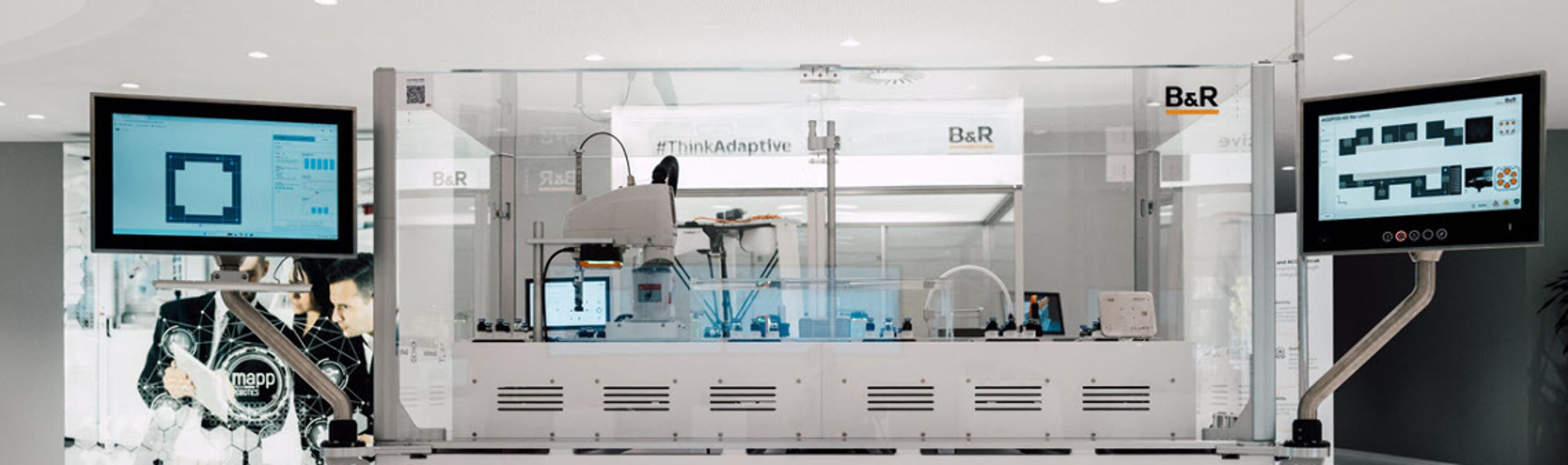
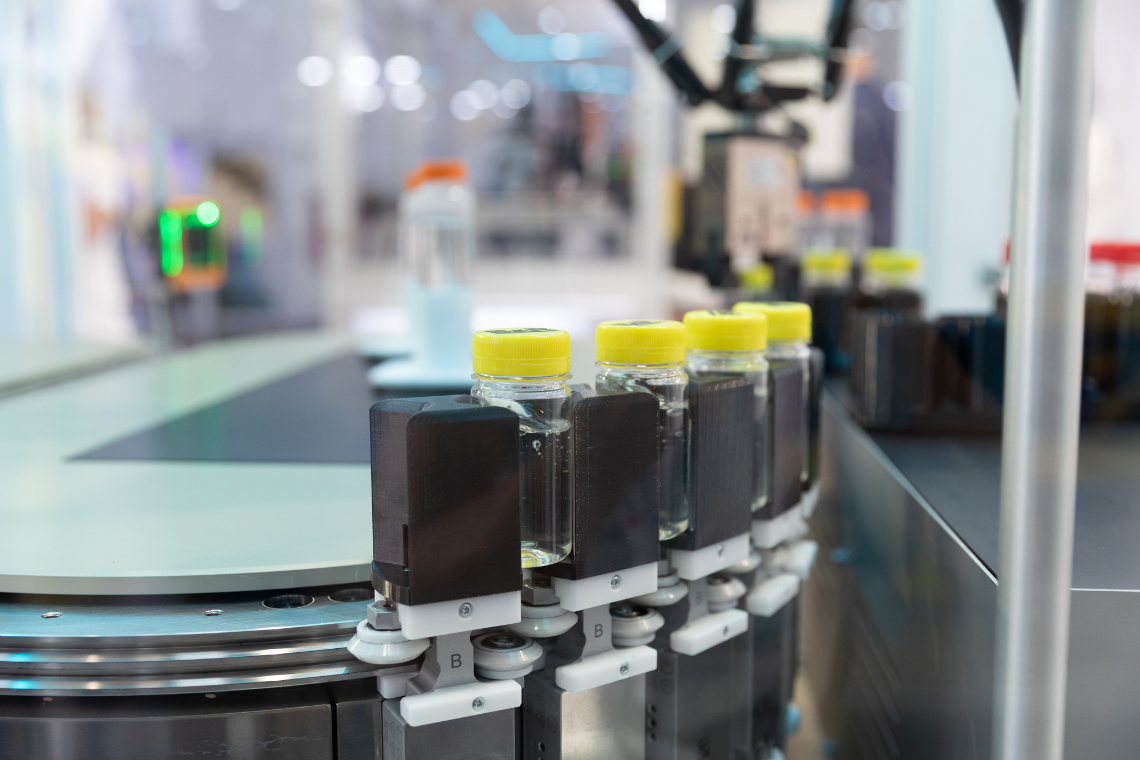
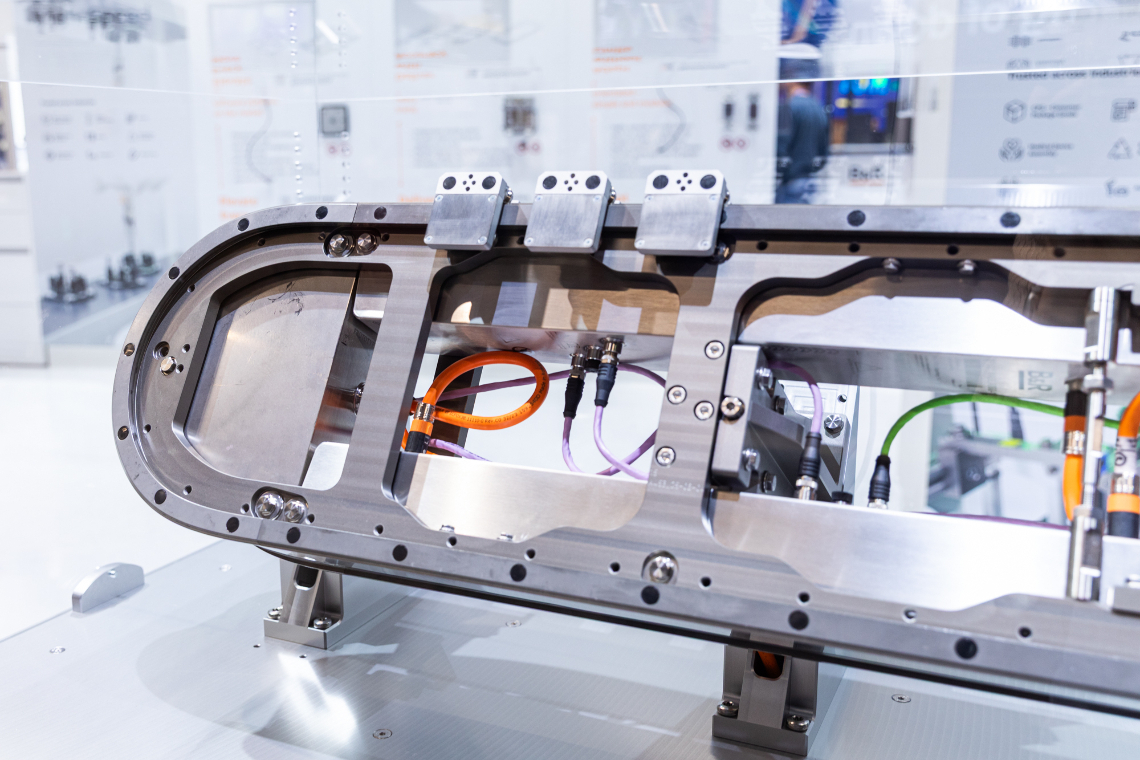
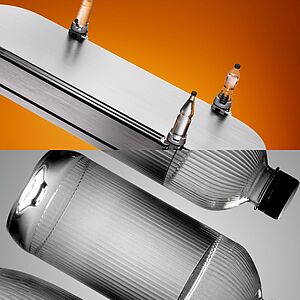
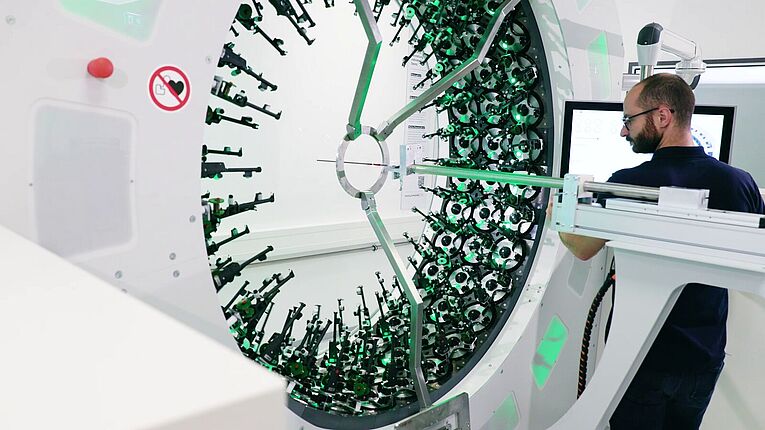
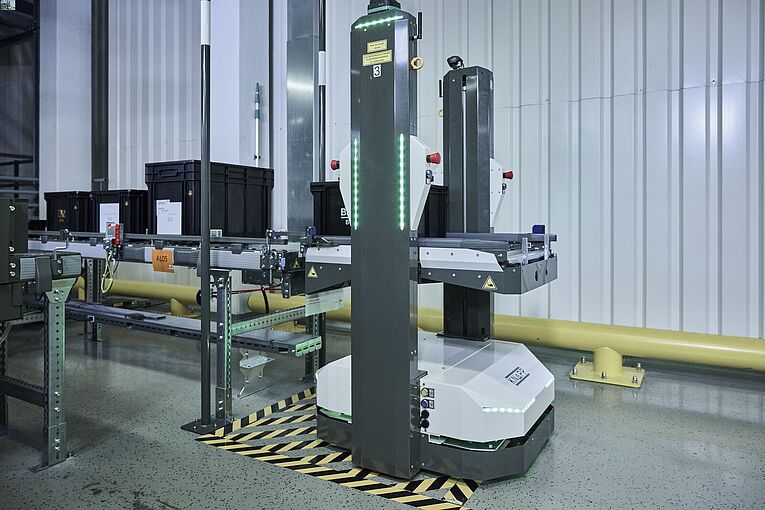
The technological foundation for this approach is a Mechatronic SystemsRather than connecting isolated systems for control, motion, safety, robotics, and material handling, the concept relies on a seamless software and engineering platform that eliminates interface losses and complexity. One key element is the decentralization of drive technology. By integrating power electronics directly into the motor, bulky control cabinets can be eliminated, significantly reducing machine footprint. Mechatronic transport systems take this concept even further. Products are carried on shuttles and propelled electromagnetically, enabling independent positioning and motion control throughout the process. This allows product flow to be individually controlled and synchronized. Format changes are performed entirely through software during operation, reducing both effort and downtime.
In addition, integrating drives, robotics, transport systems, and planar motor technology into a common control loop and synchronizing them at the microsecond level creates highly responsive production systems. Deviations are communicated instantaneously, enabling corrections or the removal of defective products at maximum speed.
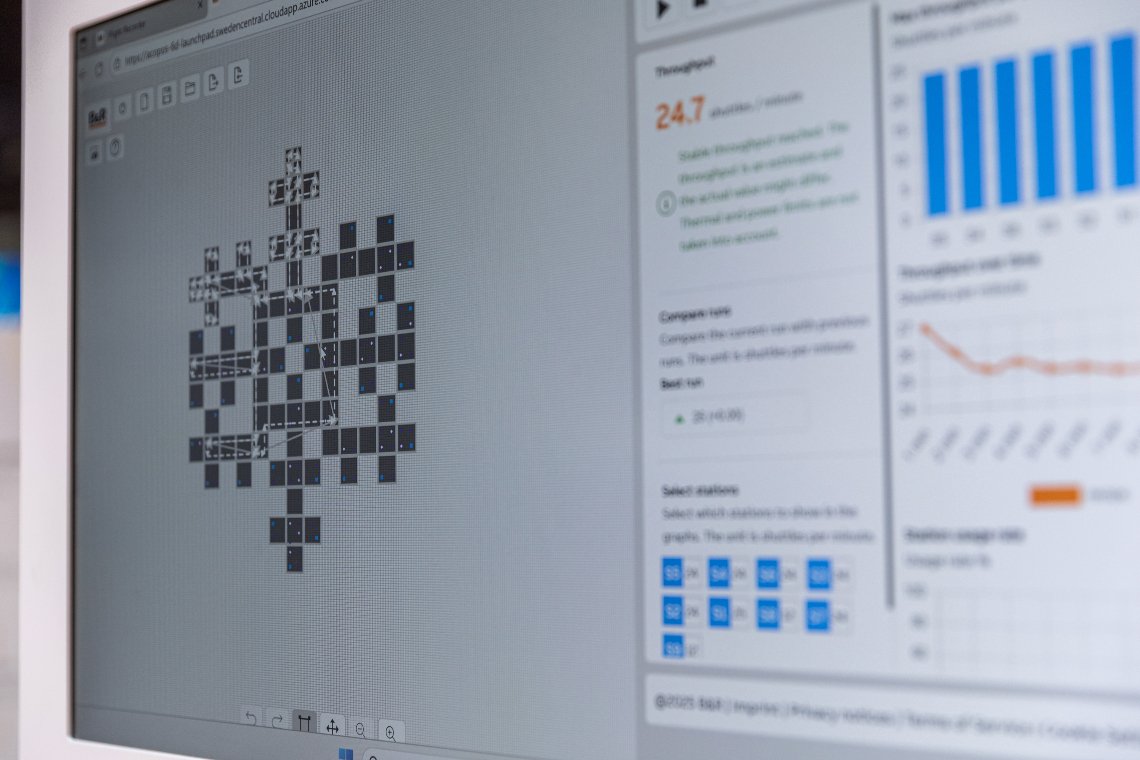
A common challenge in packaging automation is oversizing, where hardware resources are specified beyond actual requirements. To avoid this, the adaptive approach relies heavily on simulation and co-creation. Digital twins are used to test motion sequences virtually and size components precisely, reducing both energy consumption and development time.