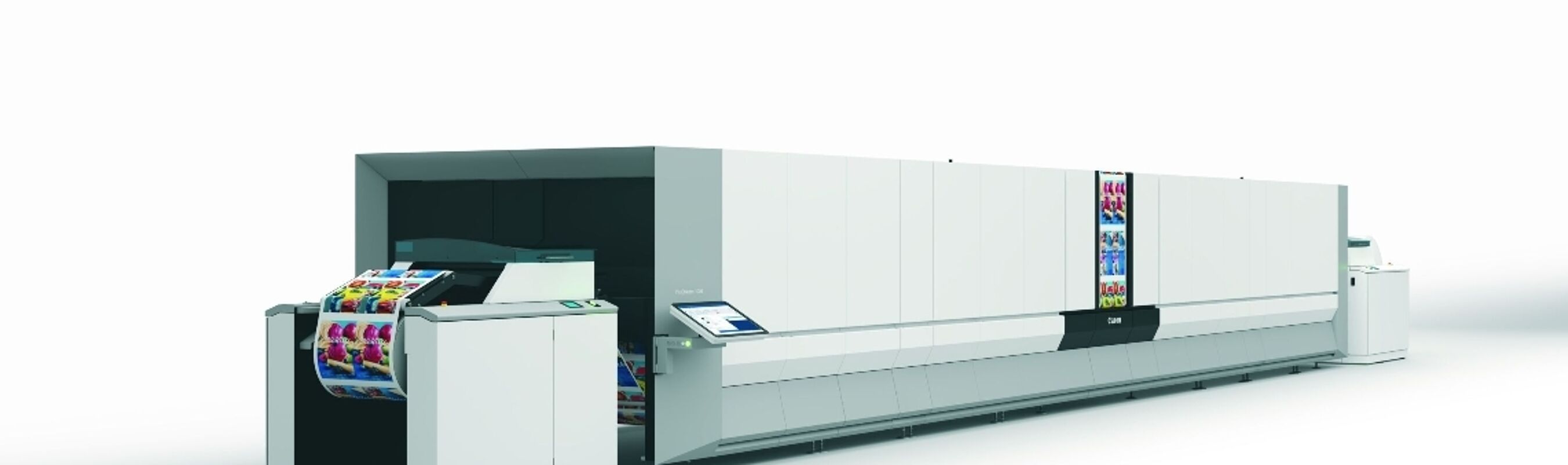
What was previously reserved for offset printing has, for some time now, also been achievable with Canon Production Printing’s inkjet systems. The Canon ProStream, now in its second generation, enables print service providers to produce high-quality print products more flexibly and cost-efficiently than with conventional web offset presses. A key contributor to this development is the use of dynamic drive systems and high-speed web handling technology from B&R, ABB’s Machine Automation Division.
High-gloss magazines, art prints and advertising brochures are typically produced on coated paper to achieve the desired visual and tactile quality. This paper is usually treated with a coating of pigments and binders and then smoothed using rollers.
Coated paper allows for particularly sharp and vibrant print results. Until recently, however, this was limited to offset printing, as the material was optimized for that process. Conventional inkjet printers are generally unsuitable for coated substrates: the ink pigments do not sufficiently adhere to the smooth surface, causing the image to blur. As a result, inkjet systems were largely confined to applications with lower quality requirements, using uncoated papers, while offset printing remained the only option for high-end production with adequate productivity and cost efficiency.
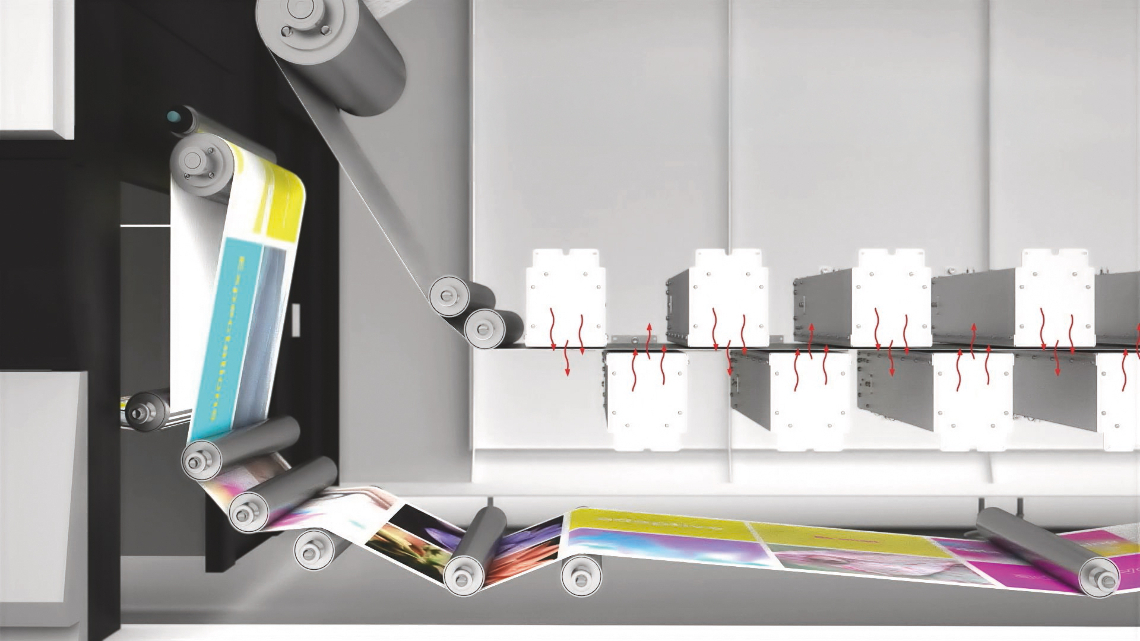
This changed in 2017 with the introduction of the Canon ProStream. Its polymer-based ink technology, combined with optimized, non-contact air drying, enables - for the first time - an inkjet web press to print on a wide range of glossy, silk and matte coated papers. Both print quality and productivity match or exceed those of offset printing. In the second generation, the ProStream 3000, further improvements to ink, drying and cooling have increased productivity by 20% at the same energy consumption.
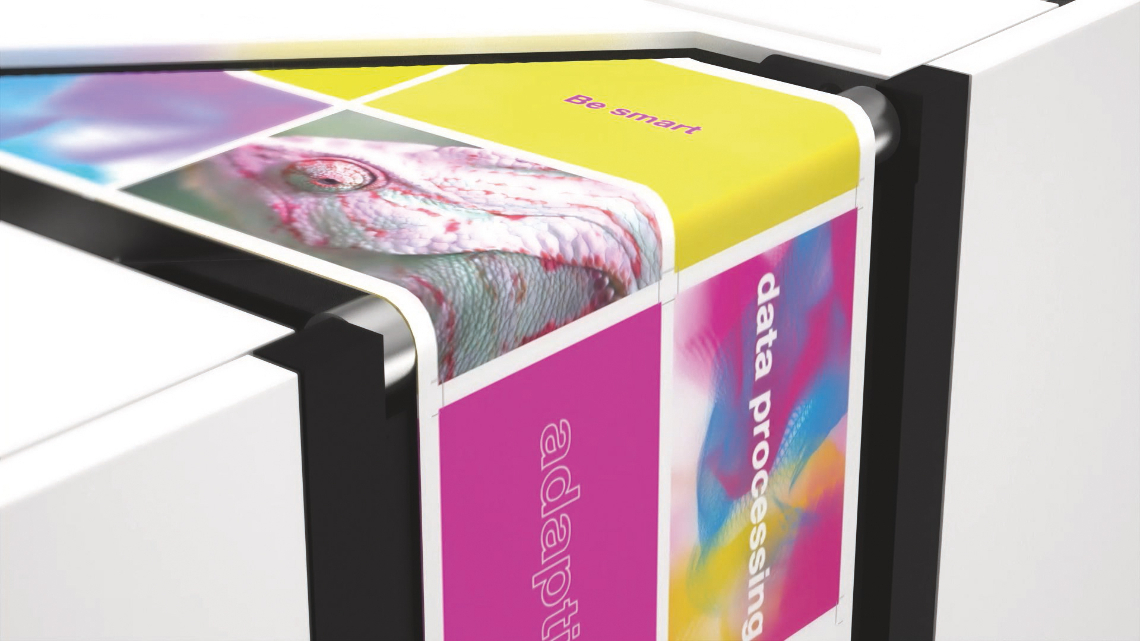
Inkjet technology also offers a fundamental advantage over offset printing: as a fully digital process, it allows for complete variability of printed content without the need for makeready procedures when changing jobs. This makes even very short runs economically viable and enables new business models. Print service providers can increase flexibility and explore applications such as print-on-demand and highly personalized products, which offer greater communication value.
The Japanese printing technology specialist Canon, with its R&D and production site in Poing near Munich, has addressed this challengeone that is likely to benefit the industry as a whole.