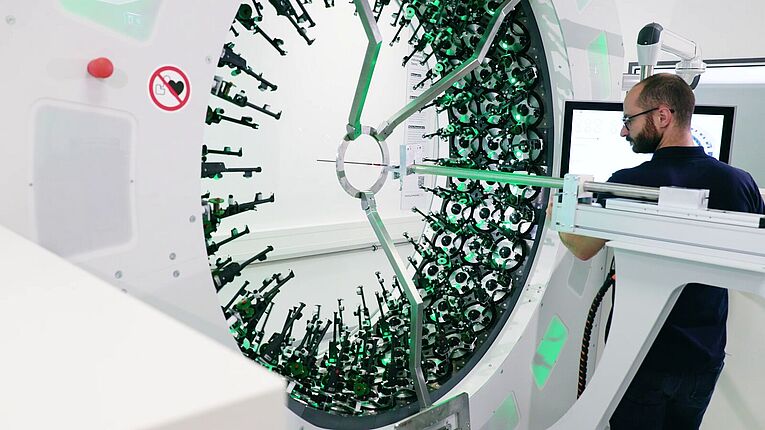
Precision where it matters: Open hybrid transport concepts for pharmaceutical packaging lines

Increasing product variety, ever-shorter product life cycles, and growing cost pressures require packaging solutions that are flexible, efficient, and economical at the same time. With its new stick pack line, the German machine builder Körber, operating in the pharmaceutical business sector, has taken an unusual approach. Rather than relying on a single transport system, the line combines multiple transport technologies, including B&R's ACOPOStrak technology. This is possible because of B&R's open automation platform, which seamlessly brings both worlds together. The result is a solution that combines flexibility, precision, and high productivity.

Stick packs are commonly used for pharmaceutical and nutraceutical products such as powders, granulates, liquids, and pastes. Different stick widths, film widths, and packaging formats quickly push conventional transport systems with fixed geometries to their limits, increasing the need for format parts, extending changeover times, and reducing machine flexibility.

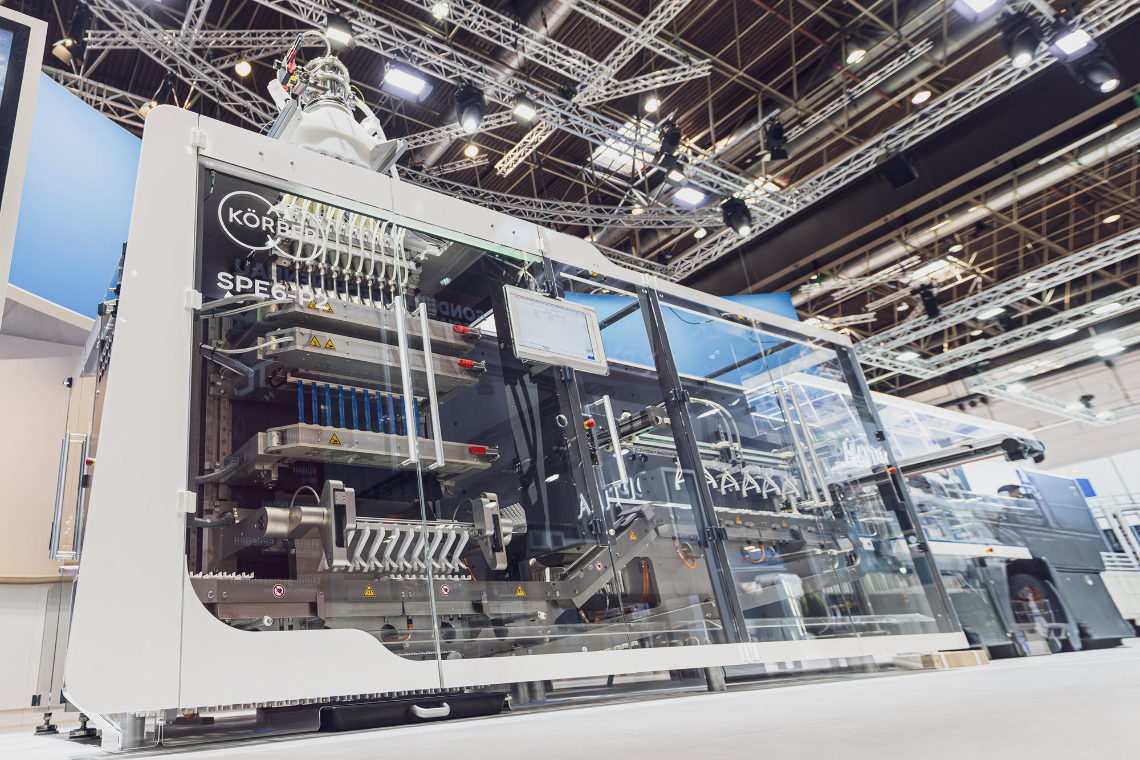
Körber's new SPE6-P2 stick pack line is an innovative packaging solution that combines primary and secondary packaging within a compact machine design. "The key was to bring the strengths of different technologies together on a common platform, combining flexibility, precision, and economic efficiency," says Ulf Leineke, Vice President Design Machinery.

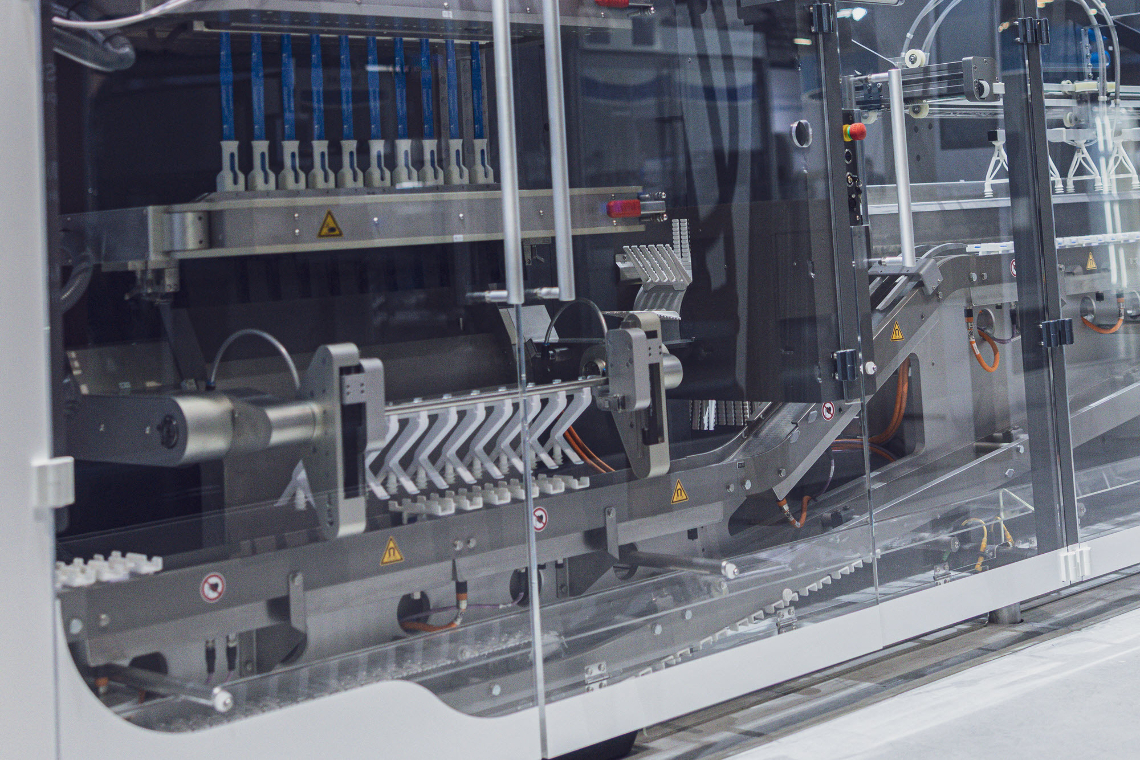
The SPE6-P2 brings flexibility, precision, and productivity together in a compact packaging machine.

Instead of relying on a single transport system, Körber combines its own transport technology with B&R's ACOPOStrak. This hybrid architecture is enabled by B&R's open automation platform, which allows both technologies to be seamlessly integrated on a common foundation.

The machine processes up to 600 stick packs per minute while enabling flexible product transfer for different formats. This allows pharmaceutical manufacturers to maintain productivity despite a high variety of products, while avoiding unnecessary system complexity, floor space requirements, and investment costs.

No compromise with a hybrid approach

The real innovation does not lie in introducing a new technology, but in combining two existing technologies. ACOPOStrak's independent shuttle control provides maximum precision and flexibility exactly where it is required. At the same time, Körber's in-house transport solution creates additional degrees of freedom in machine design.

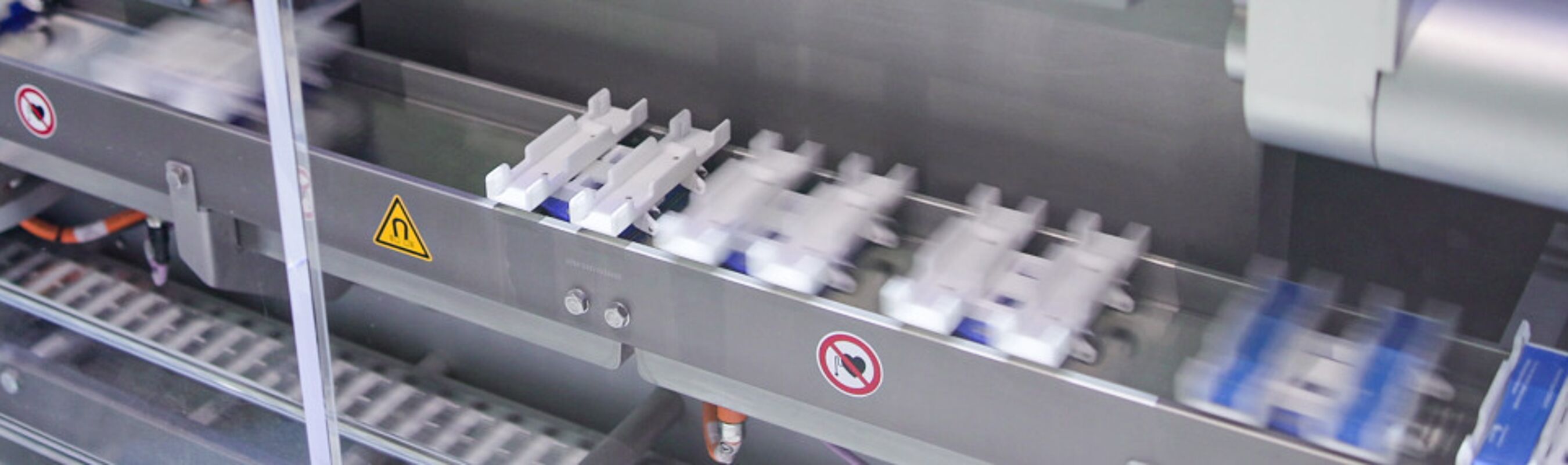
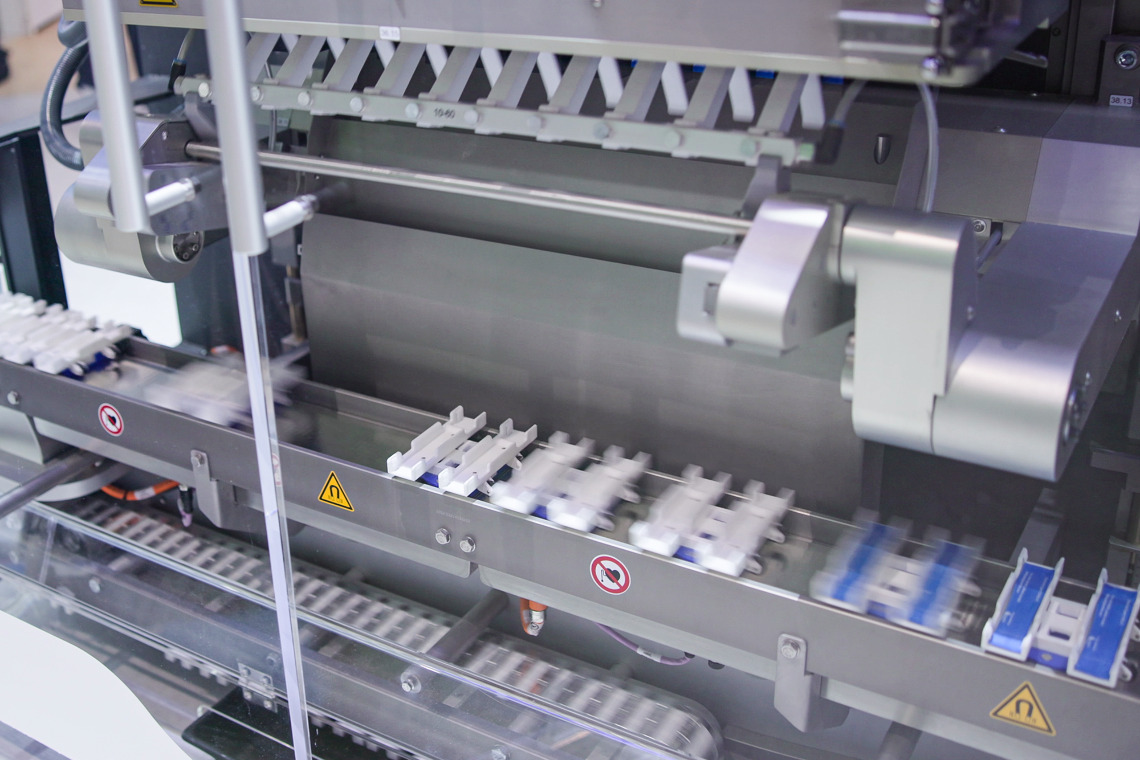
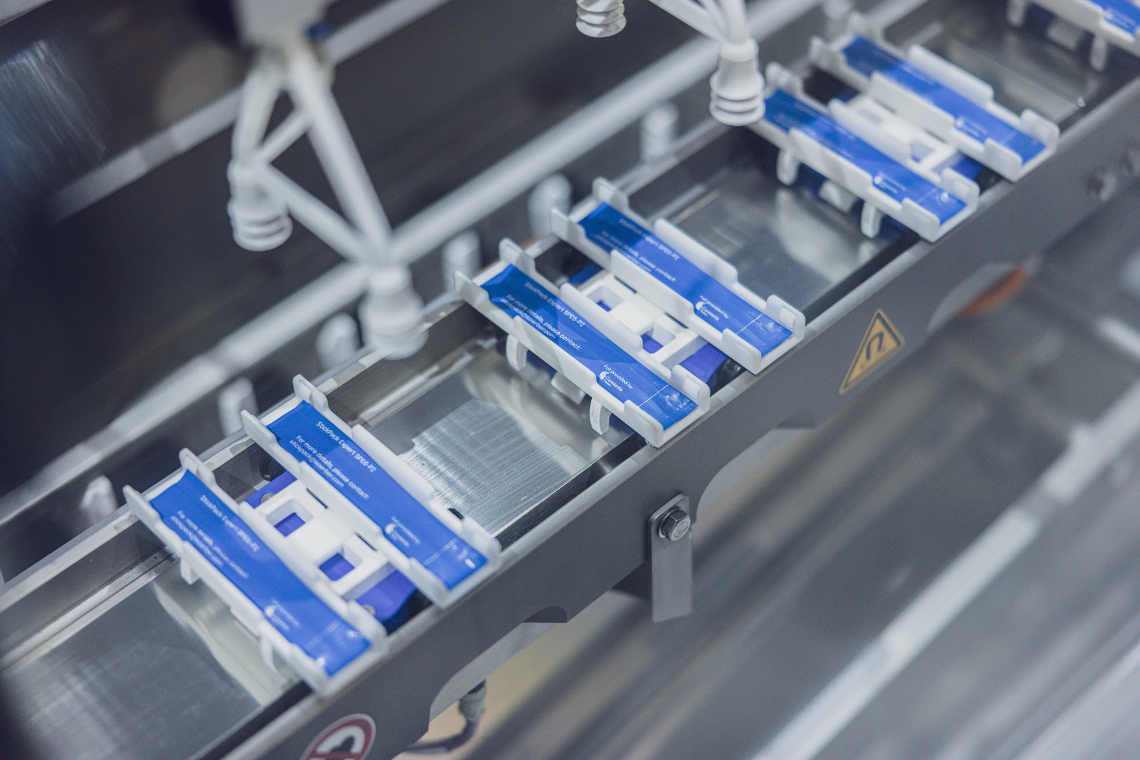
The SPE6-P2 uses ACOPOStrak for precise, independent shuttle control where flexibility and accuracy are needed most.

Thanks to B&R's open architecture, Körber did not have to choose between its own transport solution and intelligent track technology. Instead, both approaches were unified on a common platform.

Seven ACOPOStrak segments handle the highly precise transport tasks within the packaging process, while Körber's transport solution efficiently manages intermediate and return transport operations.

ACOPOStrak is a flexible transport system for maximum efficiency.

"Traditional track systems are limited by fixed geometries. Our approach allows us to use ACOPOStrak exactly where precision and flexibility are needed. This reduces complexity and costs while creating more freedom in machine layout," says Leineke.

The result is a hybrid transport architecture that optimally leverages the strengths of both systems. This not only reduces space requirements and technical complexity but also lowers the overall cost of the solution.

Faster Changeovers, Lower Costs

A major advantage of the SPE6-P2 is its high adaptability. The machine enables largely tool-free format changes, with many adjustments performed through software rather than mechanical intervention. This reduces downtime and improves production responsiveness.

The SPE6-P2 processes up to 600 stick packs per minute while enabling flexible product transfer for different formats.

At the same time, the hybrid machine concept contributes to greater cost efficiency. Thanks to its compact design and the targeted use of ACOPOStrak only in process steps where maximum positioning accuracy is required, machine and system costs can be reduced without compromising performance or flexibility. Fewer format parts, a smaller footprint, and faster changeovers further reduce total operating costs.

One platform instead of multiple standalone solutions

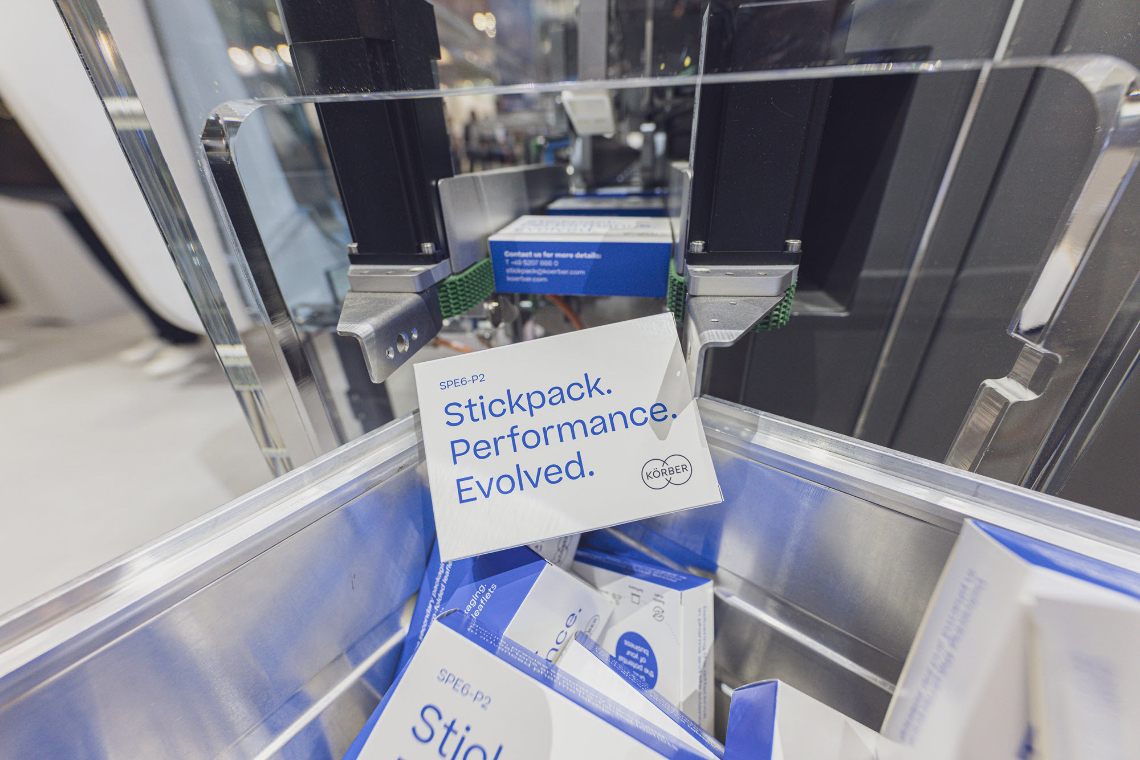
Beyond the transport concept, Körber also relies on additional integrated automation solutions from B&R throughout its machine portfolio.The transfer of stick packs into the cartoning machine is performed by a gantry robot controlled by ACOPOSmotor and the X20 control system.

What ultimately mattered was not the selection of individual automation components, but the ability to combine them seamlessly with Körber's own technology. B&R's open automation platform gave Körber the freedom to integrate its own transport concept with ACOPOStrak, robotics, and additional components on a common foundation.

"Without the openness and precision of B&R's platform, this machine concept would not have been possible. It gave us the freedom to combine our own transport concept with track technology, motion control, and robotics into one integrated solution," explains Leineke.

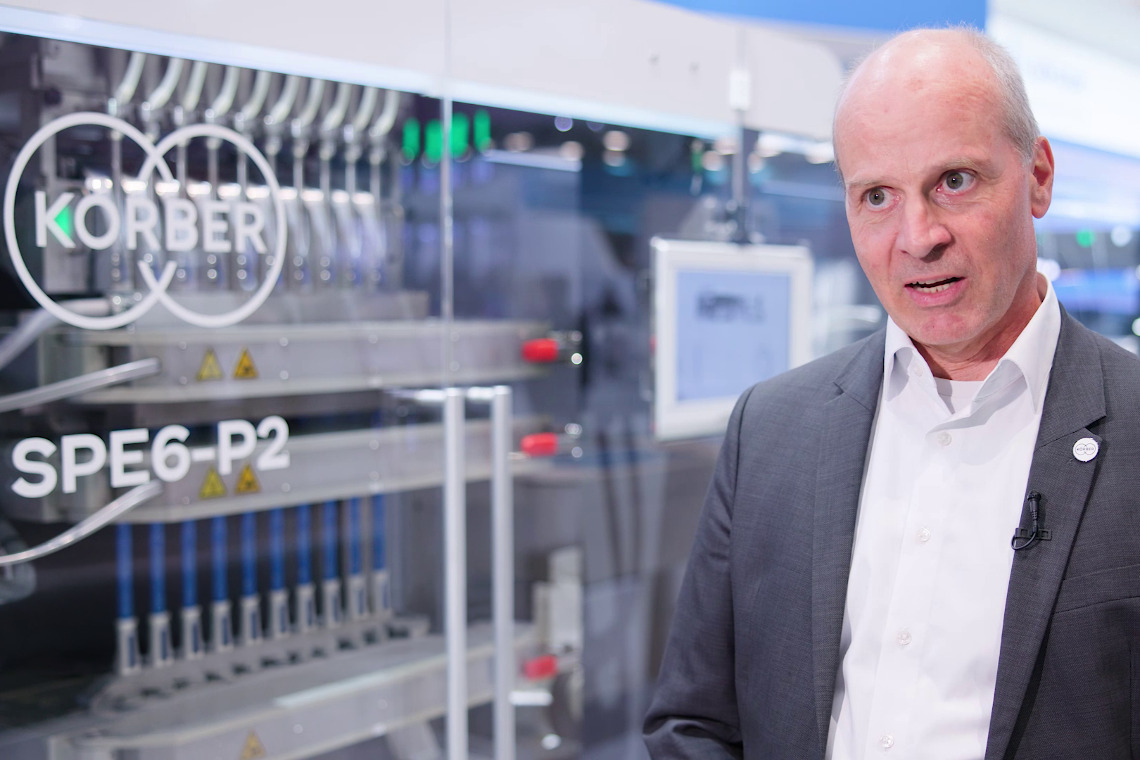
Ulf Leineke, Vice President Design Machinery.

For the machine builder, this means maximum design freedom during development. For operators, complexity is reduced because all functions can be controlled, diagnosed, and maintained through a single platform.

Openness as the Foundation for Innovation

The SPE6-P2 is the result of close collaboration between the engineering teams at Körber and B&R. The objective was not to replace existing technologies, but to identify the best solution for the application.The openness of B&R's platform played a decisive role. It enabled Körber's own transport concept to be seamlessly combined with ACOPOStrak and other automation components.

B&R's open automation platform gave Körber the freedom to integrate its own transport concept with ACOPOStrak, robotics, and additional components on a common foundation

The result is a tailored architecture designed specifically for the requirements of modern stick pack production: maximum precision where it matters most, maximum flexibility during format changes, and a machine architecture that can adapt to future requirements.

Välj land och språk

B&R Logo