
Scaling Modular Semiconductor Equipment Efficiently with Integrated Automation

From cars to cloud computing, modern economies don’t run without semiconductors – they stall. That’s why Europe and the United States are intensifying efforts to bring more chip production back to their regions, aiming to secure long-term supply. At the same time, the industry faces highly complex manufacturing challenges. Precision at the nanometer level leaves no room for error, while dynamic market demands require a high degree of scalability – making advanced automation the foundation.

Semiconductor manufacturing demands extreme precision, perfectly synchronized processes and the ability to adapt quickly to changing requirements. For AP&S, a Germany-based manufacturer of wet process equipment, this means developing machines that combine precise process control with the flexibility to handle different wafer sizes, batch volumes and evolving market needs.

Delivering speed in an increasingly regional market

Investments in Europe and the United States are accelerating the shift toward more regionalized semiconductor production. The goal is to make supply chains more resilient and reduce dependence on global uncertainties. For AP&S, this means equipment must not only meet the highest technical requirements, but also be available faster, adaptable to regional regulations and designed for a wide range of use cases.

“We are seeing growing pressure from multiple directions – shorter lead times, global uncertainties and highly diverse customer requirements,” explains Tobias Bausch, CMO and CTO at AP&S.

At the same time, machine complexity is increasing, as is the importance of automation. Modern motion, safety and robotics solutions must interact seamlessly within a highly integrated machine architecture. As a result, the choice of automation platform becomes a critical success factor.

Modular system design with a clear focus

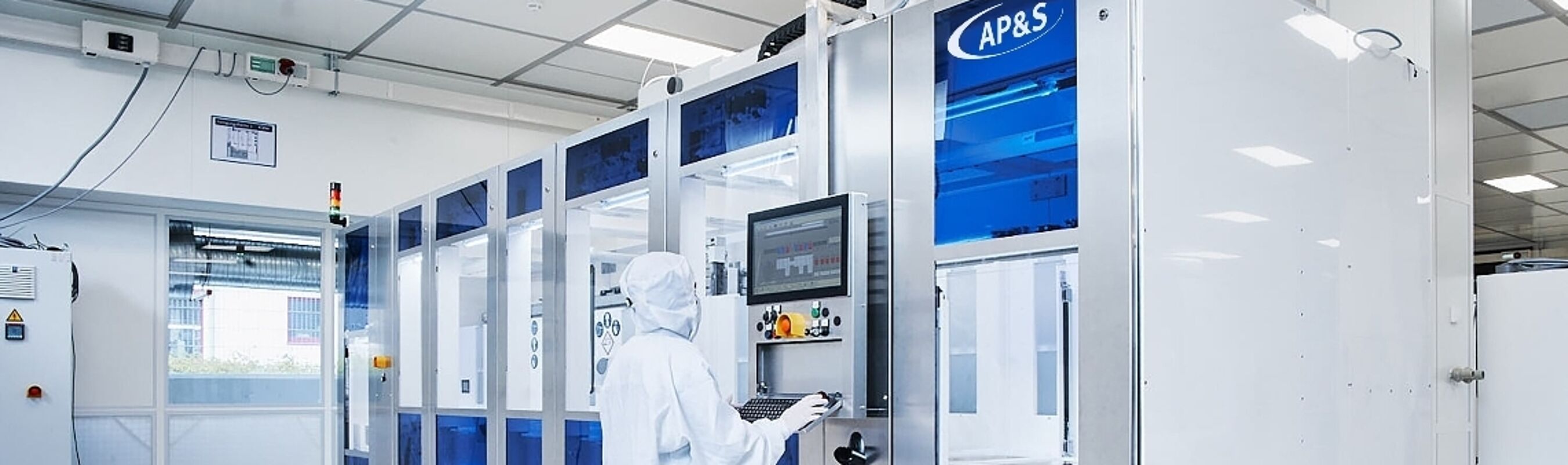
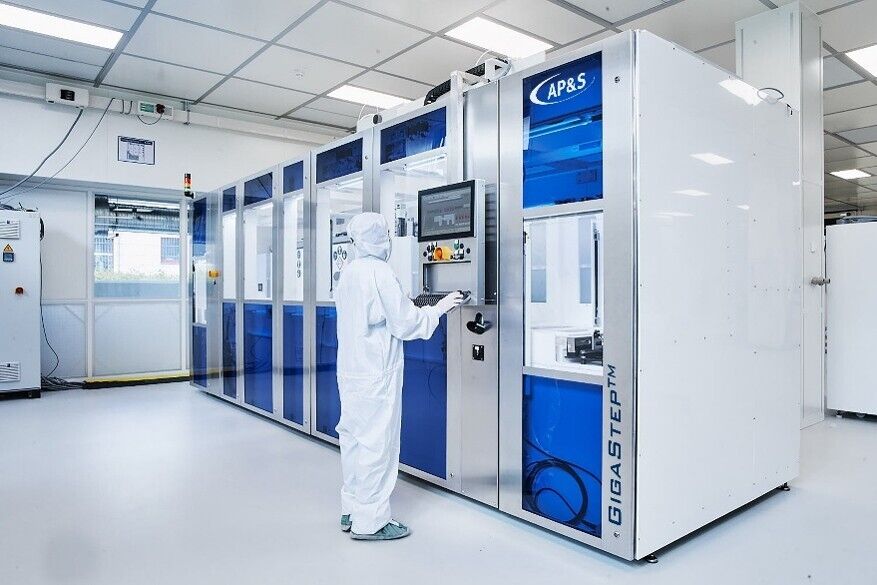
With the GigaStep, AP&S offers a wet process system built on a highly integrated machine architecture based on B&R’s automation platform. The system stands out for its modular design: various wet cleaning processes can be flexibly combined in a compact footprint and applied to different wafer sizes and thicknesses.

“Our goal was to create a platform that can be adapted to very different customer requirements without having to redesign the machine each time,” says Bausch.

GigaStep processes wafers from 6 to 12 inches, adapts to different batch sizes and throughput requirements and can be configured with precision. From the outset, AP&S therefore relies on a fully integrated automation approach from B&R.

AP&S’ GigaStep, a new system with a highly integrated machine architecture based on B&R’s automation platform.

Integrated automation as the backbone

B&R’s integrated automation platform forms the backbone of the GigaStep system. Instead of combining multiple standalone solutions, AP&S relies on a unified architecture that seamlessly integrates control, motion, safety, visualization and industrial PCs into a single system. This fundamentally reduces system complexity and eliminates interfaces between isolated solutions.
“Engineering teams can focus more on actual process optimization – where true differentiation in semiconductor manufacturing is created. That is the real added value of our systems,” explains Tobias Bausch. In GigaStep, this integration enables seamless communication between all components, flexible machine layouts and the easy integration of additional technologies. Because all elements are aligned from the outset, development becomes more efficient and system behavior far more predictable – a decisive advantage in an environment where even the smallest deviations can impact yield. Flexibility without additional complexity“Engineering teams can focus more on actual process optimization – where true differentiation in semiconductor manufacturing is created. That is the real added value of our systems,” explains Tobias Bausch. In GigaStep, this integration enables seamless communication between all components, flexible machine layouts and the easy integration of additional technologies. Because all elements are aligned from the outset, development becomes more efficient and system behavior far more predictable – a decisive advantage in an environment where even the smallest deviations can impact yield.

A partnership for complex requirements

AP&S has steadily expanded its use of B&R technologies over more than two decades – from traditional PLC solutions to a fully integrated automation approach. Over time, this has led to close technical alignment and a shared understanding of system requirements and development processes.
“We have grown together. Today, we benefit not only from the technology, but above all from the close collaboration and direct access to automation expertise,” says Bausch.
This collaboration is a key factor in managing increasing complexity. Direct access to experts in design, integration and commissioning enables faster problem-solving, reduces project risks and ensures stable development processes. For a mid-sized company like AP&S, this partnership model is essential to deliver highly complex systems reliably and on time – especially in a market with constantly increasing technical and time pressures.

Flexibility without additional complexity

With GigaStep, AP&S demonstrates how modular machine design and integrated automation can be effectively combined to meet the demands of modern semiconductor production.
By standardizing key components while maintaining flexibility, the company can address diverse market requirements without disproportionately increasing engineering effort.

Watch here the full video to get more details:

Tobias Bausch

CMO and CTO at AP&S


"With B&R’s integrated automation platform at its core, GigaStep replaces fragmented solutions with a single system, reducing complexity and letting our teams focus on true process differentiation."

Wybierz kraj i język

B&R Logo