Demand for high-performance batteries and energy storage systems has never been higher. Batteries for electric vehicles, in particular, are driving this growth; at the same time, however, demands in other application areas are also rising steadily. Manufacturers must rapidly scale up new cell chemistries and expand capacity in the shortest possible time s well as meet the highest standards for quality, safety and sustainability.
From electrode manufacturing and cell assembly to module and pack lines, production efficiency is what determines competitiveness today. High production rates, complete traceability, 100% quality control and contamination-free processes are just as crucial as the ability to integrate new products into production without the need for extensive modifications.
The success of modern battery manufacturers does not depend solely on production capacity. There is a need for flexible and scalable manufacturing concepts that adapt to fluctuating market demands, make efficient use of resources and enable a rapid market launch for new generations of batteries. Those who make production data available in real time, minimize downtime and ensure quality from the very beginning lay the foundation for cost-effective and future-proof battery production.
Challenges in battery manufacturing – Are you ready?
The economic success of a battery factory depends on overcoming the following key challenges.

Production capacity
The demand for battery systems for electric vehicles is steadily increasing. Production capacity must be expanded quickly while maintaining cost-effective production. To handle increasing production volumes, high throughput, short cycle times and rapid scaling of production are crucial.

Price pressure
Intense competition is increasing the pressure to continuously reduce the cost per battery cell. In addition to material costs, energy consumption, scrap rates and equipment uptime play a crucial role in this process. Production must be organized as efficiently as possible in order to remain competitive in the long term.

Quality
Battery cells place the highest demands on quality and process reliability. Even the smallest impurities or process deviations can affect their performance, service life and safety. Therefore, especially in the automotive industry, maximum quality standards and full traceability must be ensured even at high production speeds.

Time to market
New cell technologies and battery formats are coming to market in ever-shorter cycles. To capitalize on market opportunities early on, new products must be industrialized quickly and production lines must be able to ramp up in the shortest possible time. Every month of delay can result in significant competitive disadvantages.

Future-proof
Battery technology is advancing at a rapid pace. Cell chemistry, form factors and production processes are constantly changing. Therefore, flexible and scalable production concepts are crucial; they can be adapted to future requirements with minimal effort and ensure that investments remain sound in the long term.
B&R solutions
Modular, precise and digital – The future of battery production
Production network
Conventional linear layouts are limiting today's battery factories to single-digit GWh capacity per line. By creating a flexible web of interlinked processing stations, it becomes possible to move every product to every process station as needed. Make order-of-magnitude gains in throughput, footprint and availability – all at the same time.

Continuous motion production
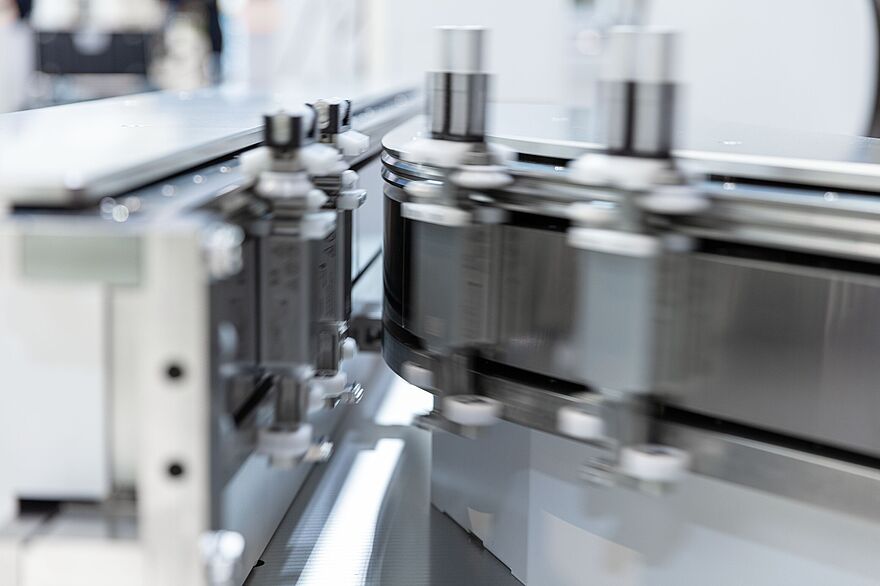
B&R's mechatronic systems form the backbone of an adaptive manufacturing ecosystem. Independently controlled shuttles carry products along the track with variable speeds and spacing. Hard real-time synchronization with robots and other equipment enables high-precision processing while the products remain on track and in motion at up to 5 m/s.
Digital twins
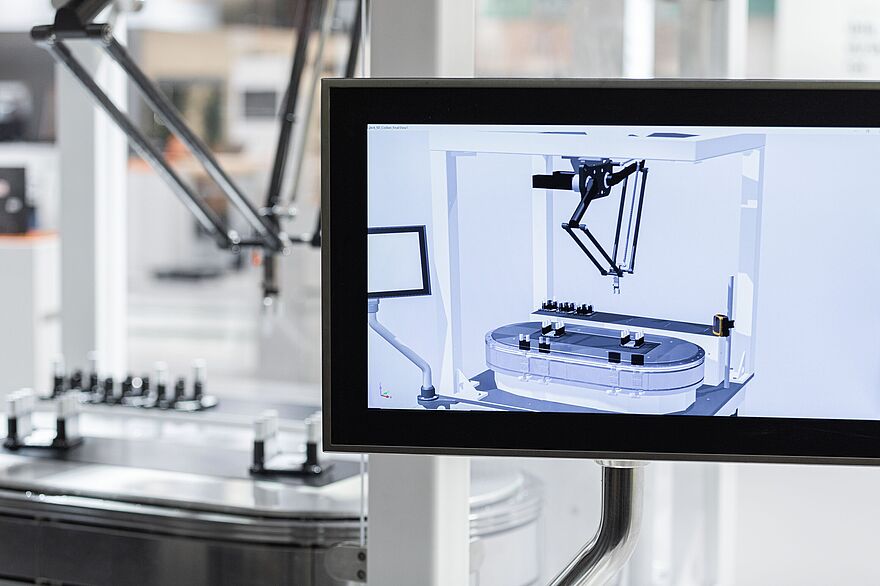
Digital twins allow early verification of new factory concepts and lower the risk of letting fundamental design flaws go unnoticed until commissioning. Enjoy peace of mind knowing that production will start on schedule. Your factory's digital twin accompanies it throughout its entire lifecycle. It simplifies daily maintenance and helps ensure the system can adapt to future challenges.
Key B&R technologies
Transportation, robotics and machine vision in perfect harmony
Adaptive transport systems
Move each battery cell independently and without rigid cycle times to significantly increase productivity and flexibility. Speed up manufacturing processes by up to 90% and reduce contamination with cleanroom-compatible transport.
Machine-Centric Robotics
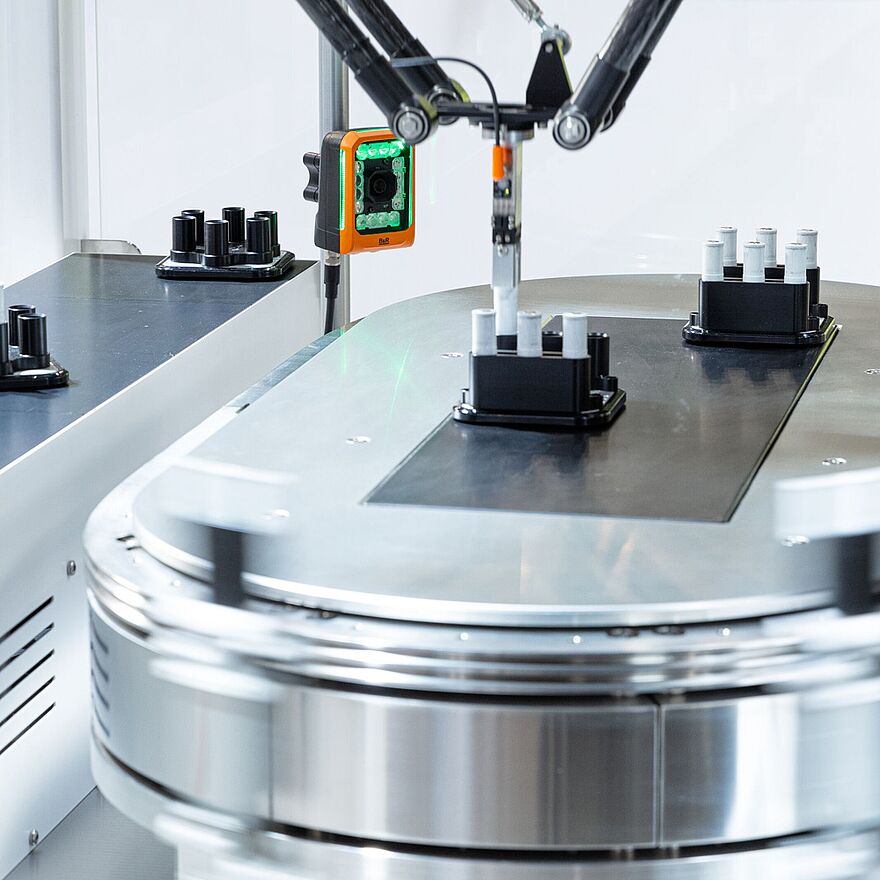
Machine-Centric Robotics combines robotics, machine vision and machine control on a single platform. This enables precise handling of battery cells, faster product changeovers and adaptive processes for maximum productivity and flexibility.
Seamless data integration
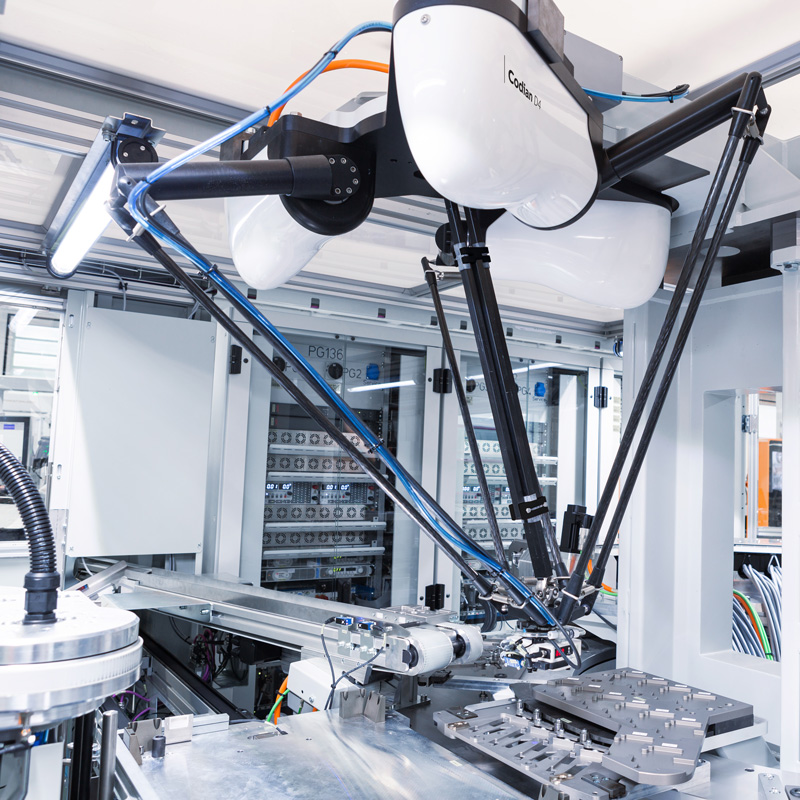
OPC UA FX enables secure, deterministic real-time communication between all system components in battery cell manufacturing. This future-proof, vendor-neutral technology enables seamless connections from sensor to cloud and guarantees maximum interoperability. This is how you perfectly synchronize conveyor systems, robotics and controllers with one another, creating the digital foundation for end-to-end transparency and maximum reliability for your production.
"Scaling up faster, ensuring quality and efficiently introducing new cell technologies – that's what will determine the future of battery production."

Real-world success stories – B&R user reports
MeSys
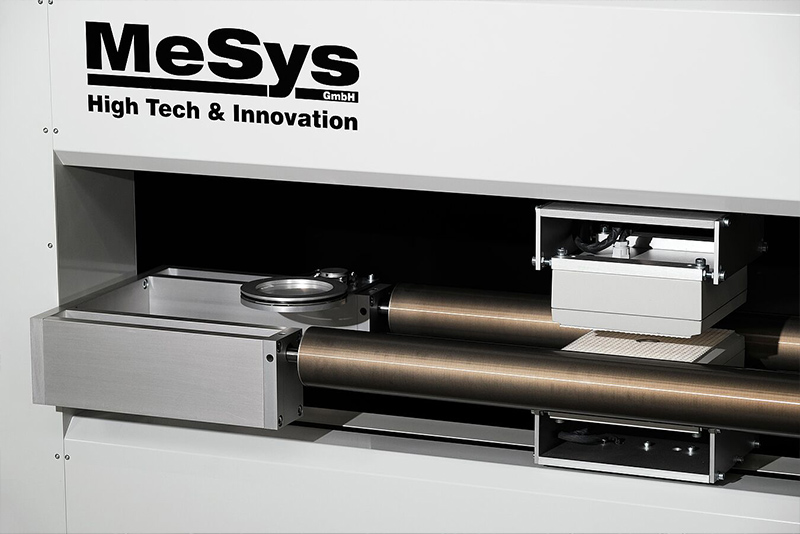
Area density measurement
In order to increase productivity, precise inline area density measurement is an essential factor for automated production control. B&R control and HMI systems help meet the high demands for software stability, error detection, interface flexibility and line integration. For line integration, the platform-independent OPC UA interface ensures smooth data exchange.
Bihler
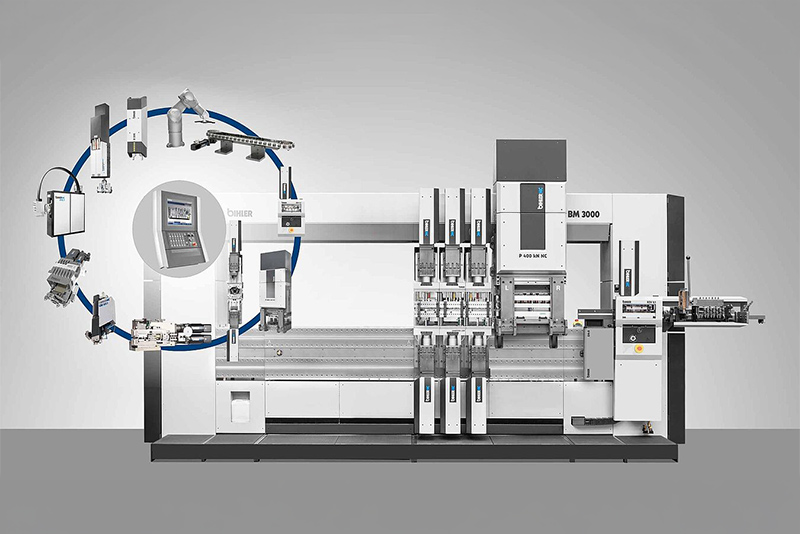
Busbar production
Bihler's modular servo stamping and forming machines meet the demands of modern mass production. By reducing material consumption by up to 50%, they significantly lower unit costs. Even flexible lines tasked with producing a large number of variants benefit from Bihler's high-productivity machines.
Exacom
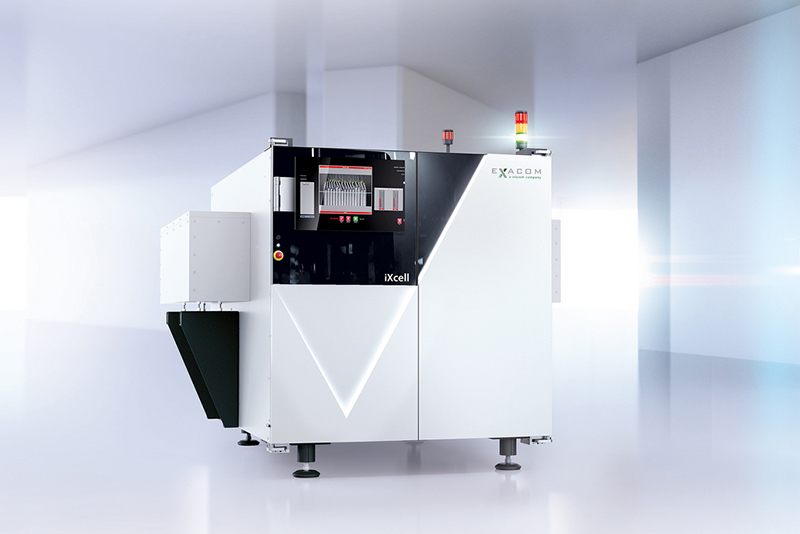
X-ray inspection
iXcell enables 100% inline x-ray inspection of cylindrical battery cells during series production. The high speed of the flexible ACOPOStrak track system and the ability to process cells while on the track and in motion makes it possible to inspect up to 175 cells per minute.
Ejot
Friction welding
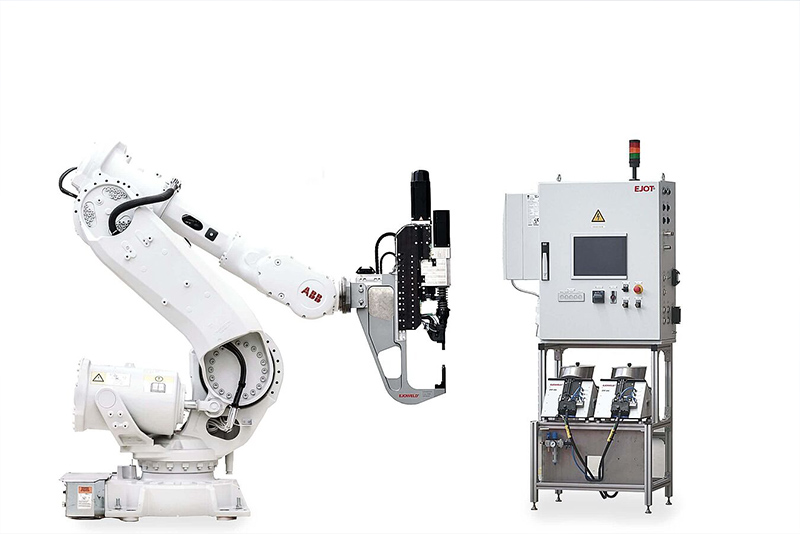
Ejoweld, developed by Ejot, is an innovative process for joining different materials to make components such as battery packs and battery cases stronger and also lighter. With high-precision force and speed control, B&R helps to meet the high requirements for high-quality joints.
FAQ
Your battery production challenges – Our solutions
Capacity bottlenecks are often caused by downtime, manual handling and slow process steps. A modern manufacturing architecture increases throughput by performing machining operations directly on the conveyor system and, in some cases, even while the system is in motion. Critical stages are handled in parallel, thereby avoiding bottlenecks. At the same time, a unified real-time network enables rapid coordination of all machine components. This allows increased productivity without duplicating the entire line. More compact system designs also reduce the amount of space required. Networked processing stations ensure higher availability because production flows can be automatically rerouted in the event of malfunctions.
Reduced manufacturing costs require maximum efficiency throughout the entire production line. Processes should be carried out directly within the material flow, without unnecessary handling, buffer times or bottlenecks. At the same time, analyzing production data helps identify defective products early on and reduce scrap costs. Careful handling of individual parts minimizes damage and improves yield. Networked production systems increase plant availability through automatic load balancing and fault compensation. In addition, smart energy solutions such as DC bus coupling and energy recovery significantly lower power consumption and reduce operating costs in the long term.
High quality standards require continuous monitoring of every single product. Modern inline inspection systems enable 100% inspection even at high production speeds. The results are analyzed in real time and used directly to optimize processes. Complete traceability ensures that all production and quality data is available at all times. Intelligent transportation systems automatically link this information to each product. In addition, cleanroom-compatible conveying and transport systems ensure that sensitive battery cells are protected from contamination caused by abrasion or particles.
A short time-to-market begins as early as the development phase. Simulation tools enable virtual evaluation of system layouts, throughput scenarios and machine designs even before the first hardware is built. This allows risks to be identified early and development times to be reduced. With parallel engineering, multiple teams around the world can work on software and features at the same time. Modular software components further reduce implementation time because standard functions are immediately available. This allows developers to focus more on product-specific processes. The result is faster project completion times, shorter commissioning periods and a significantly earlier start of production.
The battery market is growing rapidly. That's why production facilities need to be able to adapt flexibly to new cell formats, products and processes. Digital models and simulation tools support continuous analysis and optimization throughout the system's entire lifecycle. A modular hardware and software architecture lays the foundation for easily scaling and modernizing existing production lines. At the same time, adaptive machine designs enable quick product changes without time-consuming changeover times. This makes it possible to produce even small batch sizes cost-effectively. The result is a future-proof manufacturing process that protects investments over the long term while also enabling growth.
Contact us
Get in touch with one of our local experts
Or connect directly with Ronny Guber on LinkedIn.
B&R Value Provider
Find a partner near you
In addition to more than 200 B&R subsidiaries in over 70 countries around the world, we have a global network of Value Providers. B&R Value Providers work seamlessly with B&R to bring our products and services to your location. They combine in-depth knowledge of B&R technology with a deep understanding of your local market.