FlowPilot: Coordinating Robots as One System
Working Together, Not Just Side by Side How B&R’s new FlowPilot turns individual robots into a coordinated production system
A single robot can be programmed and optimized with great precision today. Features such as optimized path planning are already standard at B&R. Things become more challenging when several robots must respond to the same product flow at the same time. Who handles which product? How can the workload be distributed as evenly as possible? And what happens when conveyor speed or product flow changes?
An employee places pieces of meat into a slicing machine by hand. They then come out of the machine irregularly: sometimes one at a time, sometimes several at once. Two robots pick up the pieces and place them into trays. What sounds simple quickly becomes a challenge: every tray needs to be completely filled; no piece can be lost, and the downstream packaging needs to be supplied as evenly as possible. For Product Manager Sebastian Brandstetter, applications like these reveal a fundamental challenge of modern robotics: the more robots work together in a production system, the more complex their coordination becomes.
When Product Flow Doesn’t Cooperate
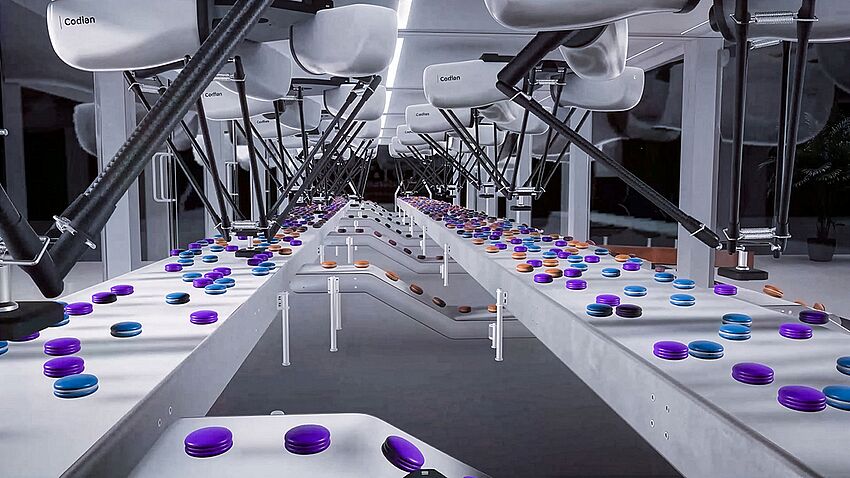
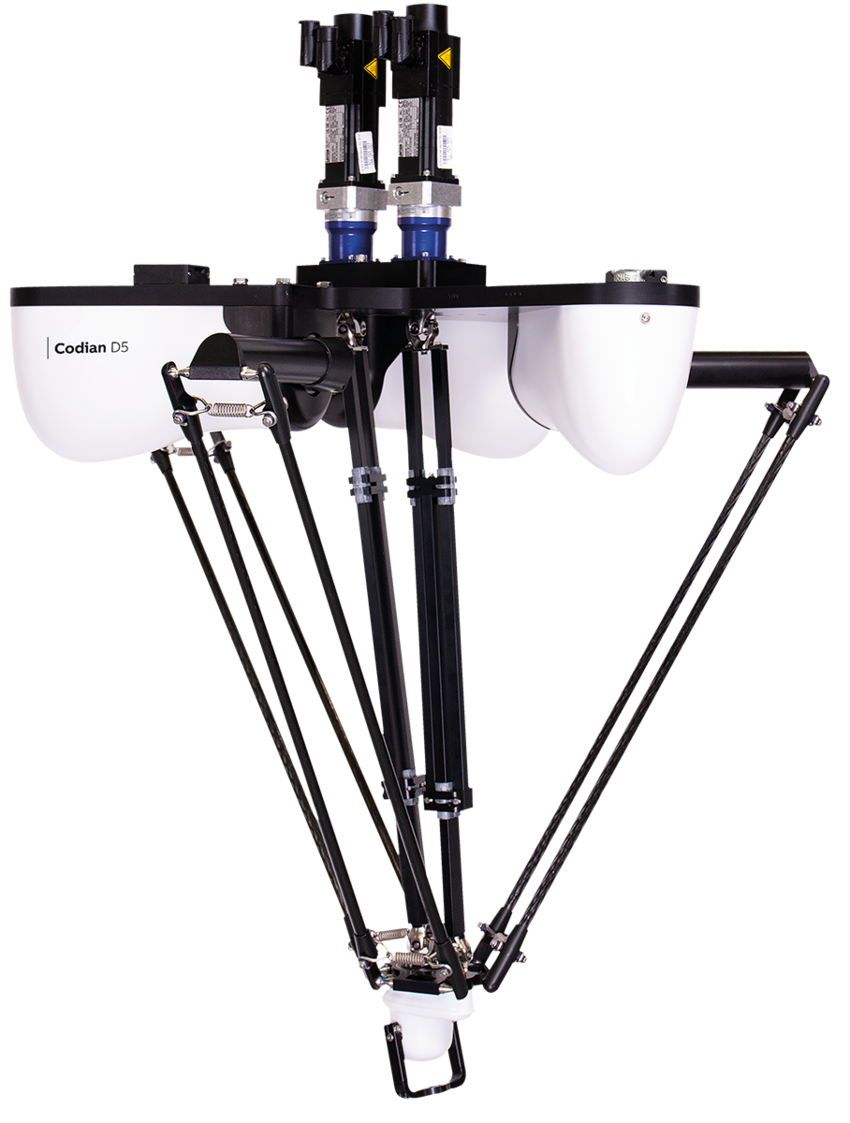
Until now, this coordination has largely been the responsibility of the machine builder. Each robot is programmed individually, after which the interaction between the individual systems has to be optimized in the customer application. With every additional robot, the complexity increases. This is exactly where FlowPilot comes in. The software coordinates multiple Delta and SCARA robots as well as conveyor systems as a single production system. Instead of treating individual robots independently, it takes their interaction into account and distributes tasks according to the current situation.
From Individual Robot to Orchestrated System
The key difference lies in the level at which optimization takes place. While each individual robot continues to execute its own movements and tasks, FlowPilot takes over coordination at the level above. Machine builders configure the production system using recipes and layouts. The software automatically handles task distribution.
FlowPilot continuously monitors what is happening in the production system: Which products are on the conveyor? Which robot is available? Where is a bottleneck developing? Based on this information, the system decides which robot takes on which task, balances the workload, and adapts task allocation to changing conditions in product flow or conveyor speed.
The aim is to optimize the overall throughput of the manufacturing cell. If one robot is currently under a heavier load and another can perform a task more efficiently, work is distributed accordingly. This helps reduce bottlenecks and make better use of available robots. A typical pick-and-place application for confectionery, for example, can process around 600 to 700 donuts per minute. A ten percent increase in throughput adds quickly: projected over a single shift; that is already tens of thousands of additional units.

Robots no longer just work side by side, but together. The FlowPilot coordinates their interaction and helps our machine builders and system integrators increase the throughput of the entire machine and implement it faster.
Less Programming, Faster to the Finished Machine
The second key lever is engineering. Anyone developing a production line with multiple robots has to program not only each robot individually but also define and continuously optimize how they interact. This coordination alone can account for a substantial share of development and commissioning effort.
FlowPilot shifts some of this work from individual robot programming to the higher-level system layer. Instead of programming numerous interactions between individual robots themselves, machine builders can define the desired behavior of the entire production system through recipes and layouts. The software handles task distribution and balancing. This reduces engineering effort and makes commissioning easier. At the same time, the preconfigured functionality makes complex multi-robot applications more accessible – an important advantage given the growing shortage of experienced robotics specialists.
Flexible When Things Change
Production systems need to be able to respond to new products, packaging formats, or changing volumes. As long as coordination is embedded in the individual programming of each robot, every change means additional effort. With the FlowPilot, the system can instead be configured at a higher level. At this point, the production system becomes a configurable entity rather than a hard-wired one.
The FlowPilot is not only intended for new machines. It can also be used to extend existing systems. The existing robots remain in place, while an additional control layer takes over coordination of the entire production system.
In the End, It Is the System That Counts
No matter how fast a robot is – if the next one has to wait for it, the entire production system loses time. FlowPilot therefore no longer makes the individual robot the benchmark, but rather the interaction of the entire system. For the two robots at the meat-slicing machine, this means that they no longer have to deal with fluctuations in product flow on their own. The system balances them out together.