Ultra‑low‑volume precision on levitating shuttles: With B&R’s ACOPOS 6D, M2‑Automation enables single‑touch production lines that reduce contamination risk, improve reproducibility, and deliver cleanroom‑ready, scalable automation from lab scale to full production.
A step change in how life science production lines are designed
“With B&R’s ACOPOS 6D, we are redefining what a production line for life science manufacturing can look like – and we are only getting started,” says Mario Nitzsche, Chief Operations Officer of M2-Automation.
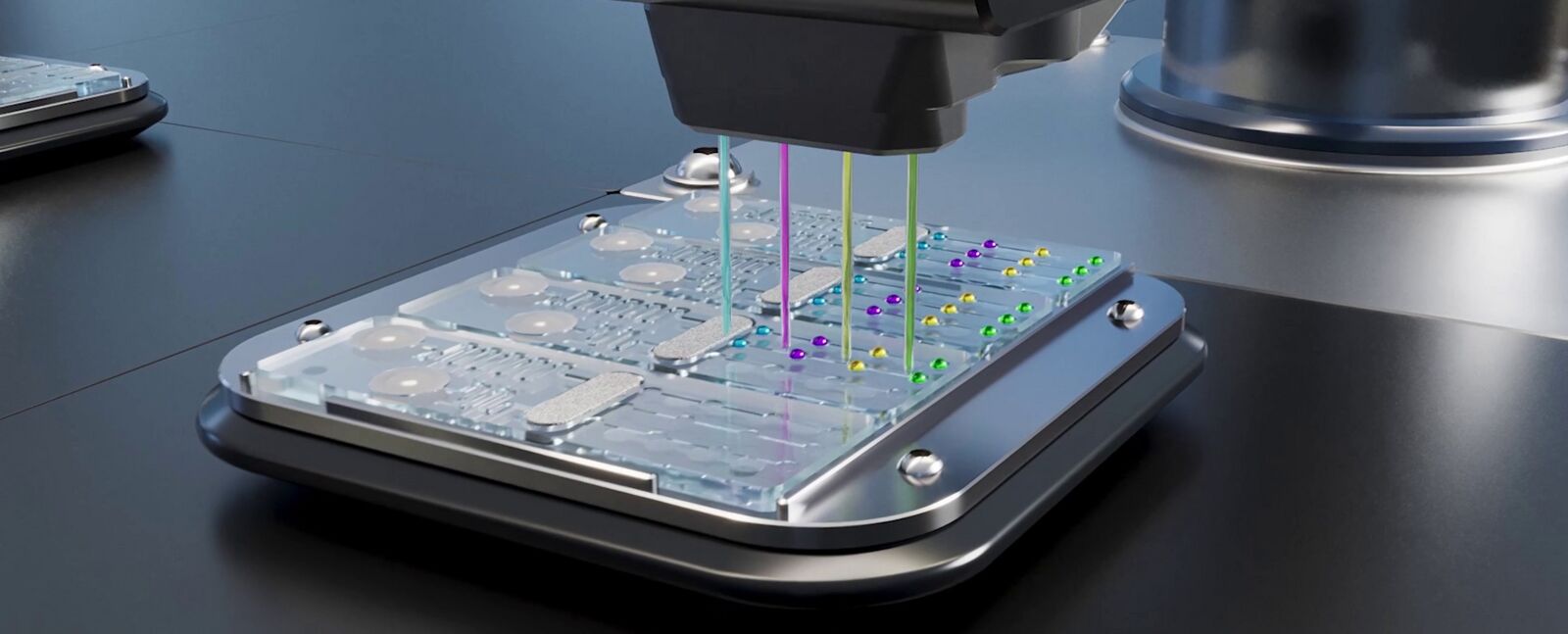
Operating at the intersection of diagnostics, biotechnology, and life science manufacturing, Germany-based M2-Automation GmbH develops advanced systems for ultra‑low‑volume microdispensing. In these lab automation, precision, repeatability, and contamination-free handling are essential. Every contact point, every instance of friction, and every manual transfer represents a potential risk to product integrity. To overcome these limitations, M2-Automation revamped its production concept. The turning point came with B&R’s ACOPOS 6D magnetic levitation system, which opened up entirely new possibilities for designing clean, flexible, and scalable production lines.
One product, one shuttle, one continuous process
Traditional production lines rely on multiple handover points between process steps, each adding complexity, risk, and variability. With the fully flexible and individually controlled motion capabilities of B&R’s magnetic levitation system, ACOPOS 6D, M2-Automation follows a radically simplified approach. A product is placed onto a shuttle exactly once. From that moment on, it moves seamlessly through every step of the process without manual transfers or repositioning: dispensing, incubation, inspection, and final packaging. This single-touch production philosophy directly translates into higher yields, improved reproducibility, and significantly reduced contamination risk. At the same time, it simplifies the overall machine architecture and process control.
Modular scalability for evolving production needs
Life science manufacturing rarely follows a one-size-fits-all model and production requirements evolve quickly. One of the most compelling benefits of the M2-Automation concept with ACOPOS 6D is the modularity it enables. End customers can start with a focused investment, for example, automating only the dispensing step or integrating a limited number of process modules. As throughput requirements grow, additional upstream or downstream modules can be added without redesigning the entire line. Slower process steps can be scaled out using parallel architectures, preserving flexibility while protecting earlier investments. This creates a foundation for adaptive manufacturing, where capacity grows exactly where and when it is needed.
“This kind of step-by-step scalability is essential for life science manufacturers,” says Lazaros Patsakas, Industry Manager Life Science at B&R. “It protects existing investments while enabling faster response to changing market and regulatory demands.”
Software-defined motion with ACOPOS 6D Launch Pad
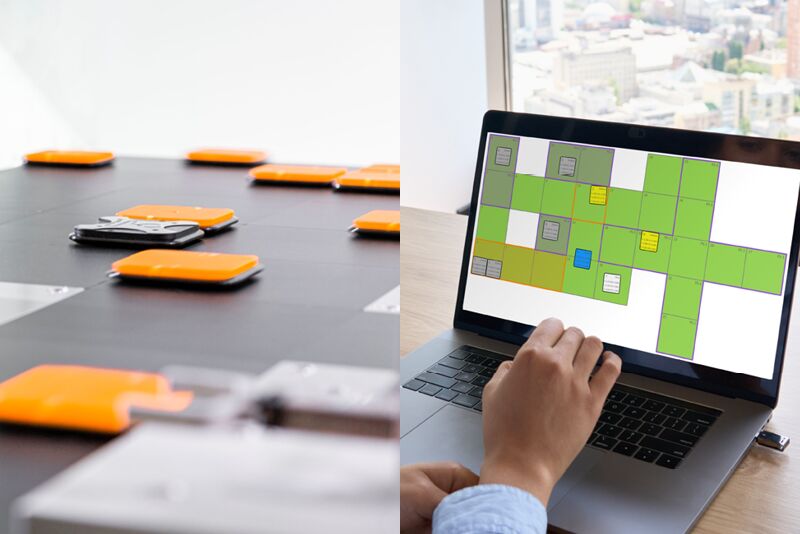
A key enabler of this flexibility is the ACOPOS 6D Launch Pad software. Its fully integrated graphical design environment allows machine layouts and process flows to be designed and validated virtually, significantly reducing the need for physical testing. Throughput calculations run automatically, while algorithms optimize shuttle paths and energy consumption. Collision avoidance is implemented directly in the firmware, ensuring safe operation even in complex layouts with multiple shuttles moving independently. Developers can focus on optimizing the process itself rather than managing motion constraints and accelerating development and time to market.
Simplifying validation in regulated environments
Regulatory validation remains one of the biggest challenges in life science automation, particularly in globally distributed production environments. Thanks to ACOPOS 6D’s advanced software components and Industrial IoT integration, each process unit in M2-Automation’s production lines is clearly defined and self-contained. This allows individual units to be shipped, installed, and validated independently, even at partner or contract manufacturing sites. What works at one location works identically at another. This dramatically simplifies multi-site rollouts, shortens validation cycles, and supports regulatory submissions across regions.
From lab-scale innovation to industrialized production
M2-Automation views ACOPOS 6D as the backbone of a fundamentally new production architecture – one that bridges the gap between lab-scale automation and validated, full-scale manufacturing. By combining its expertise in ultra‑low‑volume microdispensing with B&R’s levitating transport technology, M2-Automation enables manufacturers to scale without disrupting established processes or validation strategies.
“We are proud to bring our microdispensing expertise to this platform and equally proud to offer our customers a seamless path from innovation to industrialized life science production”, recaps Mario Nitzsche.
1140x217 - (49 KB)
Position: Chief Operations Officer, M2-Automation
Quote: “We are proud to bring our microdispensing expertise to this platform and equally proud to offer our customers a seamless path from innovation to industrialized life science production.”
Content:
Type:
 Name: Lazaros Patsakas
Position: Industry Manager Life Science, B&R
Quote: “The scalability of our system protects existing investments while enabling a faster response to changing market and regulatory requirements.”
Content:
Type: